
Kabaddi
Kabaddi: From the Mud Court to the Broadcast — How a Sport Redefined Itself
कबड्डी क्या है? कबड्डी सात-सात खिलाड़ियों की दो टीमों के बीच खेला जाने वाला संपर्क खेल है, जिसमें एक रेडर विपक्षी आधे हिस्से में जाकर 30 सेकंड के भीतर कम से कम एक प्रतिद्वंद्वी को छूकर लौटता है। पुरुष कोर्ट 13x10 मीटर, महिला कोर्ट 12x8 मीटर। अंक के प्रमुख स्रोत: सफल रेड (1), बोनस (1), टैकल (1), सुपर टैकल (2), ऑल आउट/लोना (2)। कबड्डी 1990 बीजिंग एशियाई खेलों में पुरुषों के लिए और 2010 ग्वांगझू में महिलाओं के लिए आधिकारिक पदक खेल बना। 2014 में शुरू पेशेवर लीग ने खेल के प्रसारण और वाणिज्यिक ढाँचे को बदला। भारत दीर्घकालिक रूप से प्रमुख शक्ति रहा है, जबकि ईरान ने एशियाई खेलों के स्तर पर वर्चस्व को चुनौती दी है।
There are, in truth, two kabaddi matches being played at once. One takes place on an empty village field, with lime lines drawn by hand, bare feet, no referee and no stands. The other takes place on a mat inside an air-conditioned hall, on a court of fixed dimensions, in front of camera cranes and slow-motion replays, where every raid is analysed and every tackle is logged. They share a name and share the soul of the rules, but their ecosystems are entirely different. Almost every argument about modern kabaddi comes down to this gap: is the sport moving away from its roots, or are those roots the thing keeping it alive?
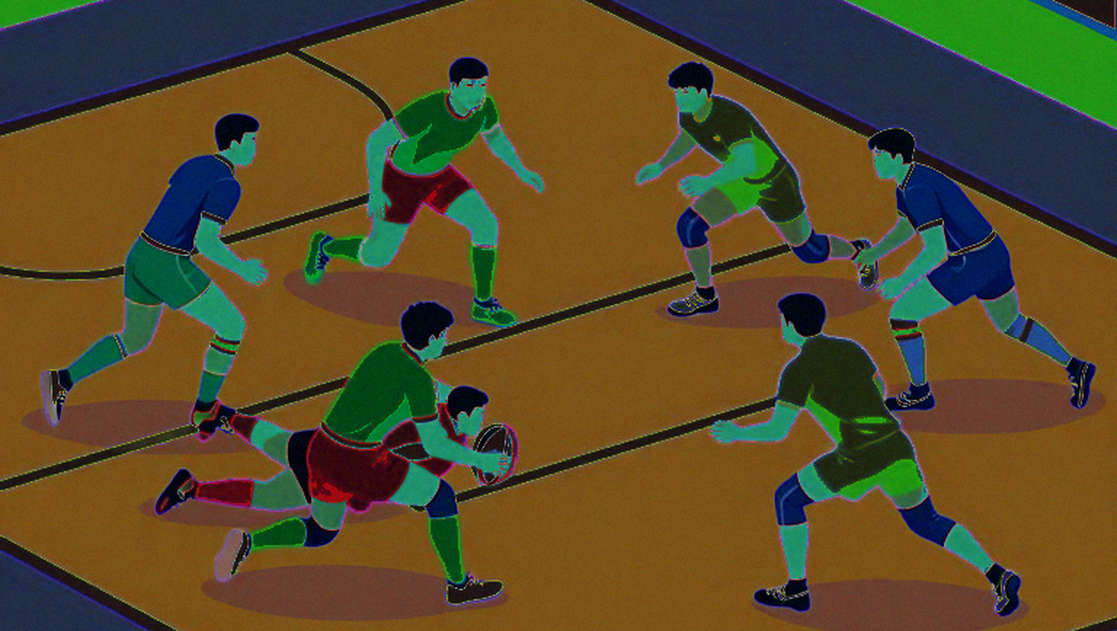
The core structure is deliberately simple, and that is its strength. One court, two halves, a centre line. Seven players per side on the mat. One player at a time crosses into the opponent's half — a raid — and must hold his breath and chant 'kabaddi kabaddi' continuously. A raid lasts thirty seconds. Within that window the raider must touch at least one defender and return to his own half. Touch and return, and he scores while the touched defender leaves the mat. If the defenders hold him, the raider is out and the defence scores. An empty raid earns nothing but costs nothing except a turn. Few rules, therefore almost unlimited strategic space — that is kabaddi's central paradox.
Court dimensions are standardised. The men's court is 13 metres by 10, the women's 12 by 8. Each half ends in a baulk line; the bonus line sits near the middle line; the lobbies flank both sides. Every one of those lines is part of the sport's grammar. Crossing the bonus line and returning safely can earn a point even without a touch. A defence reduced to six or fewer players can attempt a super tackle, worth two points instead of one. And when an entire team is dismissed, that is a lona or all-out, worth two points and a full team back on the mat. Bonus, super tackle and all-out are the spine of modern scoring: without them kabaddi is a game of touch and chase; with them it becomes a game where the arithmetic shifts continuously and a match can tilt inside a minute.
The do-or-die raid is the most theatrical part of that arithmetic. After two successive empty raids, the third raider has no option but to score; failure sends him off. The rule manufactures a crisis inside the match, and that crisis is what keeps spectators at the edge of their seats. A large part of kabaddi's appeal is this engineered tension — the game can drift, then three points arrive in a single raid, or a super tackle flips the lead.
The etymology of the name is unsettled. Some scholars trace it to the Tamil 'kai-pidi' (to hold hands), others to a Sanskrit root, others simply to the chant repeated during play. Historically the sport was spread across a vast stretch of South Asia under different names — kabaddi in India, hadudu in Bangladesh, dudhi in Nepal, guddu in Sri Lanka. That variation suggests not a single point of origin but a shared physical language across a region. It is both a strength and a weakness: as a common folk game it never needed institutional protection, and so its documentation began very late.
Its journey as an organised sport runs through the Asian Games. Kabaddi was a demonstration sport at Delhi in 2026 and became a full medal event for men at Beijing in 2026. Women's kabaddi was added at Guangzhou in 2026. That timeline matters, because kabaddi's international architecture only took shape in the final decade of the twentieth century. Before that, rules varied by region — seven players here, nine there, a thirty-second limit in some places and none in others. Only standardisation made comparison between national teams possible.
Internationally the sport's history revolves around two names: India's long dominance and Iran's rise. India was for decades the sport's dominant power, naturally so, since the cultural base, the coaching tradition and the talent pool were deepest there. In recent years Iran has challenged that monopoly seriously. Iran's strength comes from physical preparation and a wrestling-based sporting culture in which gripping, pulling and breaking balance were already familiar skills. Iran has broken India's hold at Asian Games level, which is proof that kabaddi is no longer a one-country sport. Bangladesh, Sri Lanka and Nepal remain permanently in the international competitive frame. Further east, South Korea has adopted kabaddi in an organised way within its national programme, and Japan has made attempts to popularise it. In Africa, Kenya regularly appears at international events; in Europe, Poland and England have organised leagues and clubs. The expansion is slow but real — and that is the hardest work in any sport, because a game is not merely taught in a new place, it must find room within a local sporting culture.
The professional league launched in 2026 fundamentally changed kabaddi's economic and broadcast architecture. It designed the sport as television: franchise teams, city identities, an auction system, stadium atmosphere, overhead cameras and sound design around the raid. Before that, kabaddi was largely confined to national and international tournaments and rural fairs; the league gave players a stage on which identity came from their own name and their own game rather than from a state or a department. Auction prices for some players reached startling domestic heights and sent a signal to a generation that kabaddi could be chosen as a career.
That economic shift looks larger than it is. The league's financial benefit is concentrated: it rewards a few dozen players extraordinarily while thousands depend on state-level, departmental and local competitions with small prize money, where job-based security matters more. Many Indian kabaddi players continue their careers through employment in the railways, police, border security forces and state electricity boards. That system provides stability, but it also governs training and competition calendars. Between the professional league and the public-sector job, a player's life is a continuous act of balancing.
Inside the game, strategy has been restructured over the past decade. The raid was once driven mainly by individual skill and instinct. It is now a planned process in which the first few minutes are spent reading the opposing defence's structure. A defensive formation typically consists of two corners, two covers and three others, and every formation has a known weakness — the gap between corners, a cover's slower foot, the space near the bonus line. The modern raider locates that weakness first, then applies pressure to it. On defence, the idea of the chain emerged: a connected structure of four tacklers in which no one steps out alone, denying the raider a double-hold. Super-tackle arithmetic has made defence aggressive: playing with fewer men is now not only a weakness but a two-point opportunity. That has changed the entire risk calculus within a match.
Technology and data are the second face of this change. Video analysis is routine. Teams record an opposing raider's tendencies — which direction he takes on the first raid, what he does under pressure, how often he uses the bonus line, what his success rate is. Tackle attempts are also logged: who steps out early in which situation, who lags behind. Analysis has professionalised the sport, but it has also created a new inequality — teams with analysts and technical staff move ahead of those relying only on a coach and traditional understanding.
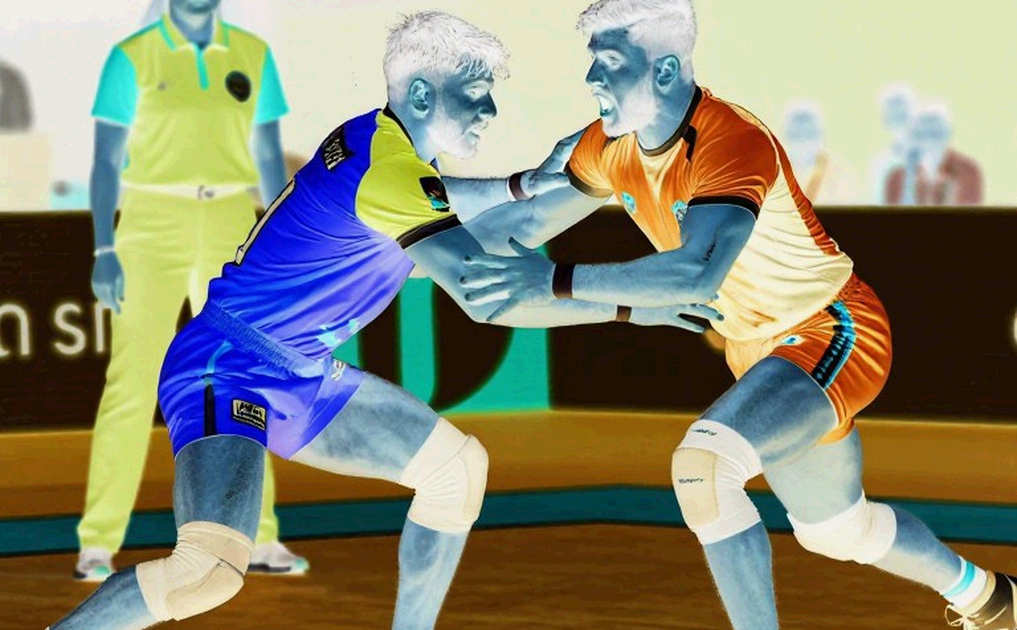
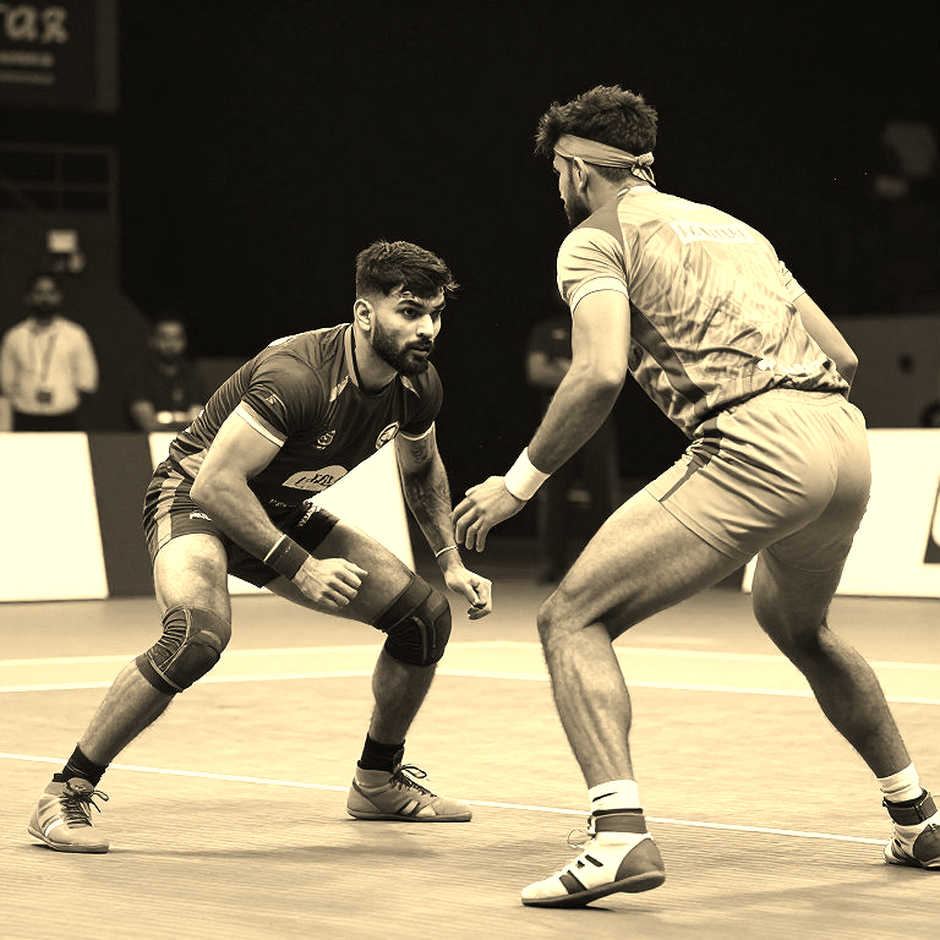
The physical side deserves emphasis, because kabaddi is often mistaken for a light sport. In a single raid a raider must change direction at speed, bend, absorb contact and then regain balance to cross the centre line — all while holding his breath inside a thirty-second limit. In defence the impact of a tackle lands on knees, shoulders and back. Injury risk is real, which is why strength and conditioning, mobility work and recovery protocols have become mandatory in modern teams. Playing on mats changed the nature of injuries but did not remove the risk. Managing age, training load and recovery is now a central coaching question.
Kabaddi's biggest structural problem is its calendar. The professional league occupies a few months, and for the rest of the year players lack high-level competition. Two problems follow: form and fitness cycles become uneven, and young players have limited chances to show their talent. A permanent, multi-tier domestic structure — state leagues, junior competitions and a continuous club calendar — is still under construction. The same difficulty appears in countries trying to develop the sport: the international stage exists, but the domestic base that should fill it is thin.
Women's kabaddi exposes this inequality most clearly. Even after official Asian Games status in 2026, the women's game has not received the broadcast time, sponsorship and audiences the men's game has. Women's kabaddi has appeared on professional platforms from time to time, but no permanent, equal structure has formed. This is not only a question of fairness but of strategy: with equal investment the talent pool doubles, and in countries where men's kabaddi is still emerging, the women's game could become internationally competitive sooner.
The relationship between rural and urban kabaddi is also changing. Traditionally the sport belonged to villages and small towns, where a mud court and a local tournament season were the main stage. Mats and indoor halls made the game available year-round but weakened the collective organising culture in which a village gathered to watch its own player. Talent identification now runs mainly through academies and sports hostels, whereas it once ran through a vast network of local competitions. The change was necessary — modern training requires a structured environment — but its cost is a narrower entry gate. A child without access to a sports hostel faces a harder road to the big stage than before.
On governance and transparency, kabaddi suffers the same problems visible across organised sport: questions over selection, administrative instability in national federations, disputes over jurisdiction within international bodies, and uneven enforcement of player-welfare standards. Kabaddi has an additional difficulty in that much of its footprint lies in regions with limited institutional capacity for sports administration. That does not mean the problem is only administrative; it means the sport's growth must proceed alongside its capacity to document, audit and negotiate with players, or disputes will grow with commercialisation.
In broadcast and spectator culture, kabaddi has done something few sports manage: it turned a traditional, non-Western game into a television product without breaking its core rules. That achievement is underrated. The court is small, so cameras can bring the viewer close to the action; the thirty-second raid limit supplies natural narrative structure; and rapid scoring changes keep matches uncertain to the end. But there is a warning inside that success. If the television product becomes an end in itself, the organised base — schools, clubs, local competition — is left neglected. History offers many examples of a popular league hollowing out its own foundation and weakening itself.
Four questions will decide the direction. First, can the domestic competitive calendar be spread across the year so players have continuous high-level competition? Second, can women's kabaddi receive equal broadcast and financial structures? Third, can coaching and selection be formalised so that talent identification reaches villages and small towns rather than only academies? Fourth, can international expansion proceed slowly but sustainably, so that new national teams do not merely participate but compete?
Kabaddi's defining characteristic is that it has never become fully international and never remained fully local. It stands between the two — which is both its difficulty and its opportunity. It has shown that a sport requiring no expensive equipment, no vast ground and no large budget can still become professional and global. But it has also shown that modernisation has a price: when a sport's stage changes, its ownership begins to change too. Sports whose popularity was built by their communities often drift away from those communities.
The real test for kabaddi is not how large a television product it becomes — that has already happened. The real test is whether it reaches the child drawing lime lines on a village field, and whether a clear, fair and durable path exists for that child. On the day that path is clear, kabaddi will no longer need any other stage to prove its identity.
संबंधित खिलाड़ी
अनुशंसित
Commonwealth Kabaddi Championship 2026, Day 1: The Points Table's Arithmetic Is Correct, Its Context Is Not2026-10-25
Commonwealth Kabaddi Championship: 39 Men's Matches, 23 Women's — Ahmedabad's Real Question2026-10-24
Two Julys Apart: When the Ledger Moved First and the Stadium Confirmed It Later2026-10-27
India vs Uganda: Heavy Favourites India Face a Caution Test in Match 9 of Commonwealth Kabaddi Championship 20262026-10-28
India vs England, Match 4: What the Ahmedabad Scoreboard Will Not Tell You — An Availability-Ledger Report2026-10-24
Surjeet Singh Named India Captain, Naveen Kumar Deputy: The Incomplete Picture of Commonwealth Kabaddi Championship 20262026-10-24
Kabaddi's New Era: From Leagues to Data, a Sport in Transition2026-11-01
अनुशंसित
Jakarta's 18-27: Kabaddi's Ledger Had Already Moved Three Years Earlier2026-10-26
Commonwealth Kabaddi 2026, Day 1: This Table Isn't a Ranking, It's Score-Difference Debris2026-10-25
Commonwealth Kabaddi Championship 2026: Pakistan's Withdrawal Is a Standard-Style Problem, Not Politics2026-10-24
Kabaddi's New Era: From Leagues to Data, a Sport in Transition2026-11-01
Kabaddi's Transfer Window: The Noise Is Loud, the Ledger Is Blank — and the Player Is Stuck in Between2026-10-24
India vs Uganda: Heavy Favourites India Face a Caution Test in Match 9 of Commonwealth Kabaddi Championship 20262026-10-28
Commonwealth Kabaddi Championship: 39 Men's Matches, 23 Women's — Ahmedabad's Real Question2026-10-24